Nature, nurture, and the legacy he wants to leave
Some values are given to us. Others we choose. And some come from somewhere we can't quite explain.
1 min read by Pip Baume
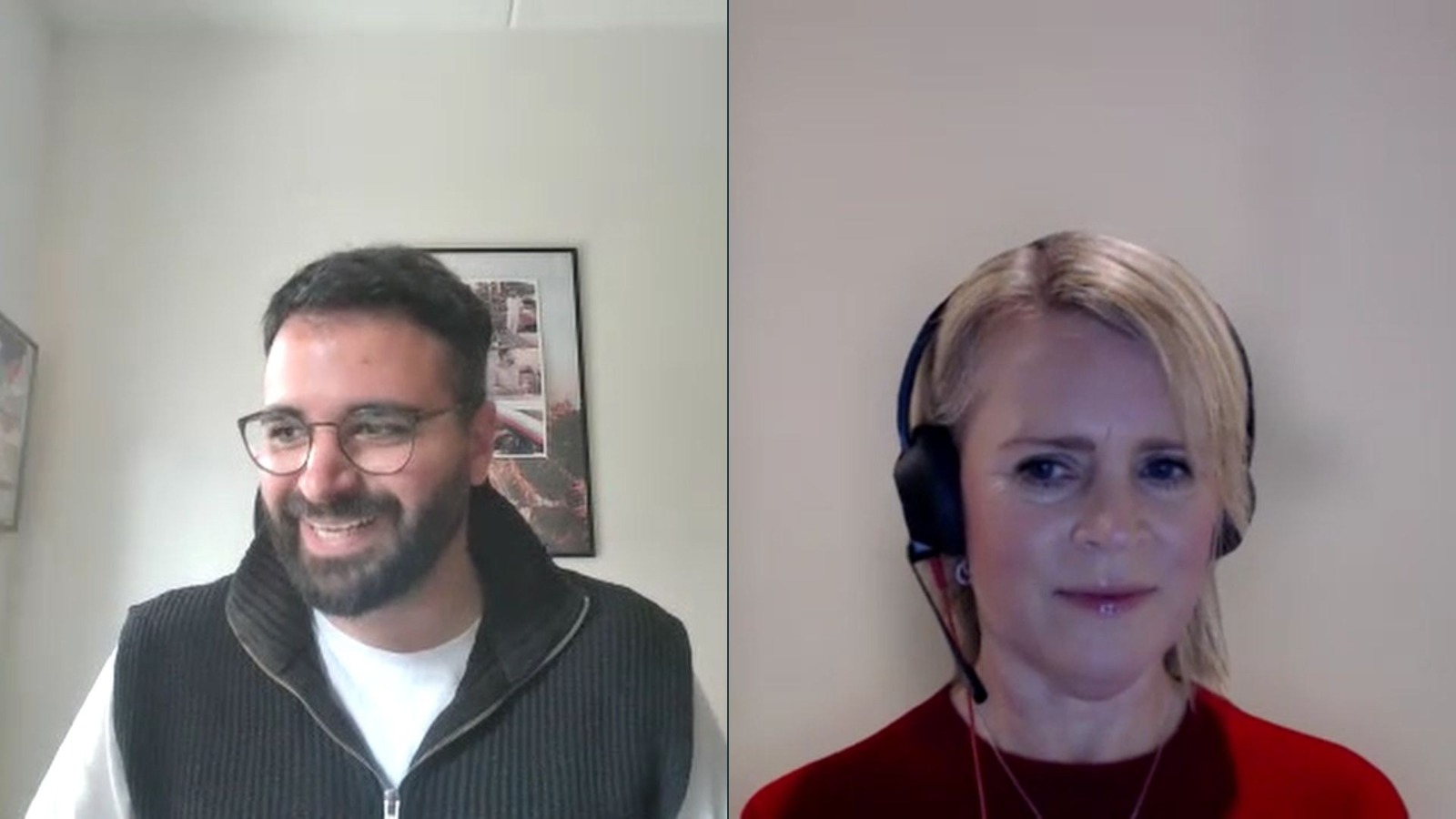
For Daniel Lund, the question of nature versus nurture isn’t an abstract one. It’s a lens he uses to make sense of who he is - how much of him was shaped by Denmark, how much was carried across the border from Hungary, and how much is simply his own.
I would say it’s probably 60/40, or 70/30,” he reflects. “Where the big percentage is nurture and the rest is nature.
The Danish way of seeing the world
Daniel sees the world in a distinctly Danish way. The culture shaped him. His adoptive parents’ values shaped him. And for much of his life, those values were simply his values - the water he swam in without noticing.
But then, at 22, he asked himself a question that changed everything.
If my dad was my age, would I be friends with him? Would he be in my close friend group?
The answer, honestly, was no.
It wasn’t a rejection. It wasn’t resentment. It was a realisation - that some of the values he’d inherited weren’t ones he wanted to carry forward. And that noticing them was the first step to choosing his own.
“That was really eye-opening for me,” he says. “Because then I could begin to change the things I didn’t like that I got from my adopted parents. Now I see it as me creating my own values and my own life. But it stems from them. The values, and all that.
Something deeper than nurture
But Daniel suspects there’s more to him than the values he was raised with. There’s something quieter running underneath - a pull toward things he can’t fully trace back to his upbringing.
I think you’re drawn to things that is nature. Like how you want to present, or maybe how you want to leave the world in a better way.
For Daniel, that pull is legacy.
He’s not sure yet exactly what shape it will take. But he knows the direction.
I want to leave this place better than when I got here. That’s one of my goals. I think we have a responsibility to do something that just makes it better for everyone.
And he wonders, without insisting on it, whether that pull might be tied to where he came from. To the origins he can’t remember. To a story that began somewhere he’s never returned to.
A life that could have gone anywhere
Part of what makes Daniel’s reflection so unique is his awareness that his life could have gone in an almost limitless number of directions.
He could have stayed in the orphanage until he was 18. He could have been adopted by another family, in another country, into another culture entirely. He could have ended up anywhere.
I could have ended up anywhere in the world, you know? But that’s not reality. Reality is I’m here. And that’s where I ended up. So I have to get the best out of that.
He’s also thought carefully about what it means to be a parent one day - whether he would have his own children or adopt. He knows first-hand what adoption gave him: a chance, an opportunity, a life he wouldn’t have had if he’d grown up in the orphanage and been released onto the street at 18.
But he also sees the system clearly. The way adoption, at its worst, can feel like ordering something from a menu. “I want this from this area.” And then a child appears.
It’s a tension he holds, because he knows both sides. He knows what the system gave him. And he knows what it can look like from the outside.
Becoming his own person
The story of Part 3 is, at its heart, about evolution. About taking what you were given and deciding, piece by piece, what to keep. About noticing the values that were handed down and choosing which ones to carry forward. About listening to the quiet pull underneath - the one that might be pointing you back toward where you began, even as you move forward.
For Daniel, that means creating his own values. Living a Danish life shaped by Danish nurture. And holding, somewhere deep inside, a Hungarian beginning that may still be somehow guiding what he leaves behind.
What comes next
In Part 4 - the final episode of this series - we explore Daniel’s adult life, the shifting cultural landscape of Denmark, and the unexpected ways his appearance and adoption story intersect with the world around him today. He shares what it’s like to be mistaken for a ‘newcomer’, why being adopted has become his “saviour” in certain moments, and what’s next for him as he continues to write his own story.
🎥 Watch Part 3 now
🎬 Daniel Lund Pt.3: Nature, nuture and legacy is now live on the Kindred Ponderings YouTube channel.
Join the conversation
Are you an adoptee who’s noticed the pull of 2 influences - the family who raised you, and something you can’t quite name? Or someone building your own values, distinct from the ones you were handed? We’d love to hear from you.
Daniel Lund was born Daniel Kalászi on 21 November 1990 in Miskolc, Hungary.
Daniel’s story is shared with his permission as part of a 4-part series on Kindred Ponderings.
Pip x